


Discover Sociology

Everybody’s got a story. And we don’t stop until we’ve uncovered what makes yours worth telling. Whether it’s discovering what is within you or as a friend, philosopher and guide, or putting the finishing touches on something special to you, we’re ready to dig in and get your life colored.
Raja Sir’s IAS Academy has built a strong reputation in Sociology Optional by evolving from basic postal coaching in the mid-2000s to a structured, mentorship-driven program with test series, answer writing practice, and personalized evaluation. Over the years, it has become one of the most trusted hubs for Sociology preparation in Chennai, producing consistent UPSC results.
Early Phase (2005–2010)
- Postal Coaching Roots: Initially offered Sociology study material and guidance through postal courses.
- Foundation Building: Focused on helping aspirants understand the defined boundaries of Sociology Optional, unlike the open-ended nature of General Studies.
- Small Batches: Even in classroom coaching, Sociology batches were kept limited to ensure personal mentorship.
Expansion & Structured Programs (2010–2015)
- Classroom Coaching in Chennai: Sociology Optional became one of the flagship offerings alongside Political Science.
- Answer Writing Emphasis: Introduced daily practice sessions and evaluation, addressing the biggest challenge in Sociology—translating concepts into structured answers.
- Mentorship Legacy: Built a reputation for guided preparation tuned to emerging UPSC trends, especially in optional subjects.
Hybrid & Online Growth (2015–2020)
- Online Sociology Courses: Expanded reach through live online classes and postal material.
- Integrated Test Series: Launched Sociology-specific sectional and full-length tests with model answers and feedback.
- Contemporary Relevance: Incorporated current affairs, case studies, and examples into Sociology preparation to align with UPSC’s evolving question patterns.
Modern Era (2020–Present)
- Skill-Building Test Series: Offers 10-test and 20-test Sociology programs with PYQ-driven practice, personalized evaluation, and one-on-one discussions with Raja Sir.
- Digital Resources: Provides Sociology playlists, lectures, and strategies on YouTube and platforms like IAS Google and CrackingIAS.com.
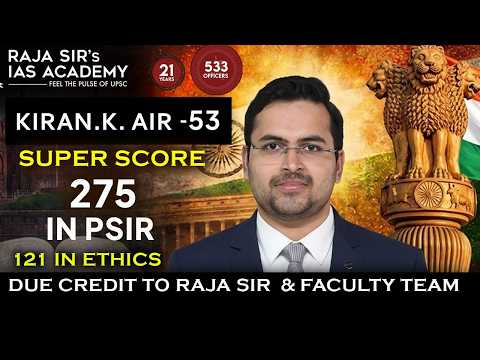
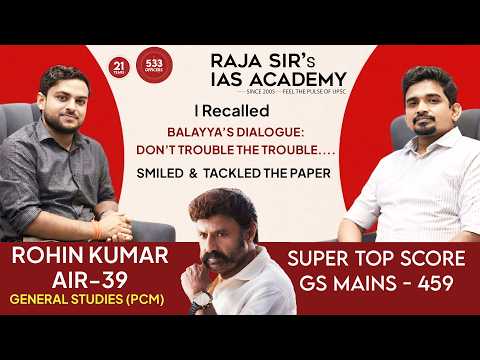
- Success Stories: Many toppers have credited Sociology Optional coaching at Raja Sir’s IAS Academy for their ranks, highlighting the structured syllabus coverage and mentorship model.
Distinctive Features of Sociology Optional at Raja Sir’s IAS Academy
|
Feature |
Raja Sir’s IAS Academy |
Typical Institutes |
|
Batch Size |
Limited students |
200+ students |
|
Focus |
Sociology + Answer Writing |
General Studies heavy |
|
Evaluation |
Personalized, faculty-led |
Often peer or mass evaluation |
|
Integration |
PYQs + Current Affairs |
Mostly textbook-driven |
|
Mentorship |
One-on-one discussions |
Generic lectures |
Legacy & Impact
- 21+ years of mentorship in UPSC coaching.
- 533+ officers guided and trained
- Ethical, small-batch model ensures aspirants receive personal guidance.
- Continuous adaptation to UPSC trends keeps Sociology Optional relevant and scoring.
Raja Sir’s IAS Academy has evolved Sociology Optional coaching from postal notes to a comprehensive, mentorship-driven program with structured test series, personalized evaluation, and integration of current trends—making it one of the most reliable choices for aspirants in Tamil Nadu and beyond.
Why is Sociology a Better Optional?
1. Compact Syllabus
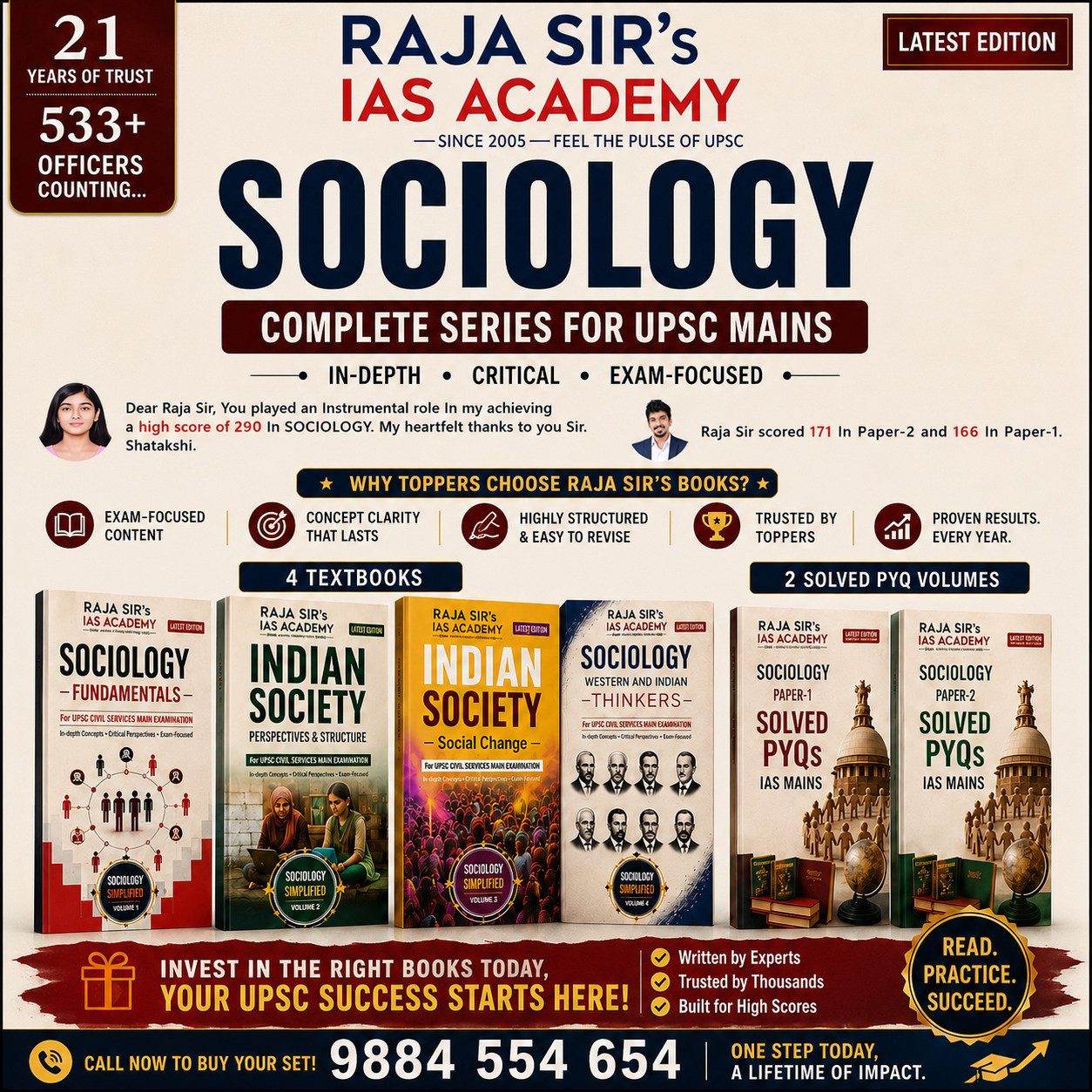
Of all the optional subjects, Sociology is one of the most compact syllabi. Only three volumes of books by Raja Sir are sufficient enough along with current issues.
2. GS Friendly
The main advantage in taking Sociology is that it provides perspective on many contemporary issues that a student has to study in General Studies. A huge part of General Studies is information oriented, though a part of it is analytical.
- Because of the vastness of General Studies, students often do not get enough time to study every issue in depth. Sociology helps rectify this gap by enabling deeper reflection on social issues.
- Sociology studies beyond the immediate and gives insights into the ways of studying the immediate. General Studies may ask about recent estimates of poverty, while Sociology helps understand the structural factors that perpetuate poverty.
- Sociology makes General Studies preparation more interesting. With the help of Sociology, analytical questions in GS can be answered more effectively. Social issues mentioned in the GS syllabus also come directly under Sociology.
3. Essay Favour
Sociology is close to General Studies and Essay. Doing little more value addition to what is elaborately done in Sociology facilitates Essay preparation on many topics.
4. Productive to Take Stand During Interview
During the Interview, a student is tested not merely on the quantum of information he has, but on what he perceives of the world and also about his status and role in it. Sociology equips a student to frame productive opinions about the issues confronting society.
In every topic it investigates, Sociology is primarily focused on why people are unequal, whether these inequalities are justified, and how institutions perpetuate social order. Its concern is the creation of a just and stable society, while also debating what a just society is and whether its creation is ever possible.
Sociology and the UPSC Journey
Sociology gives depth to what a student is anyway forced to study, though often superficially, in General Studies. It helps aspirants understand society, inequality, institutions, education, poverty, social change and contemporary issues in a more analytical and meaningful way.
Sociology Helps You Think Deeper
It is not just an optional subject. It is a way of understanding society, people, institutions and change.
|
Paper 1: Fundamentals of Sociology Paper 1 covers the roots of sociology. You study big ideas and methods to do research in society. 1. Sociology as a Discipline
2. Sociology as Science
3. Research Methods
4. Key Sociological Thinkers
5. Social Stratification and Mobility
6. Work and Economic Life
7. Politics and Society
8. Religion and Society
9. Kinship Systems
10. Social Change
|
Paper 2: Indian Society-Structure and Change Paper 2 links sociology to India. You learn about its social life, history, and shifts. A. Introducing Indian Society Perspectives
Colonial Impact
Social reforms and movements B. Social Structure Rural and Agrarian Structure
Caste System
Tribal Communities
Social Classes
Kinship in India
Religion and Society
C. Social Change in India Visions of Change
Rural Transformation
Industrialisation & Urbanisation
Politics and Society
Social Movements
Population Dynamics
Challenges
|
Core Approach
-
Conceptual Foundation (Paper I):
-
Build strong understanding of classical and modern sociological thinkers (Marx, Weber, Durkheim, Parsons, Merton, Mead).
-
Emphasize definitions, theories, and frameworks rather than rote memorization.
-
Encourage linking thinkers across topics to show depth in answers.
-
-
Application to Indian Society (Paper II):
-
Relate Paper I concepts to Indian realities—caste, class, religion, gender, globalization.
-
Integrate current affairs, reports, and surveys (NFHS, NITI Aayog, UN reports) into answers.
-
Use case studies and contemporary examples to make answers relevant.
-
Answer Writing Method
-
Structured Responses: Introduction (definition/theory), Body (analysis + examples), Conclusion (critical view).
-
Thinker Integration: Every answer should reference at least one sociologist.
-
Visual Aids: Flowcharts, diagrams, and tables to make answers crisp and examiner-friendly.
-
Daily Practice: Regular writing sessions with evaluation and one-on-one feedback.
Raja Sir’s IAS Academy treats Sociology Optional not just as a subject but as a scoring strategy—conceptual clarity in Paper I, contextual application in Paper II, and relentless answer writing practice tuned to UPSC trends.
Study Materials

To order Call / Whatsapp - 9884 554 654
Test Series

To Join Call / Whatsapp - 9884 554 654
Join Sociology Optional Classes
For admission and course details, call 9884 554 654.
Student Testimonials
Anshul Gupta IAS
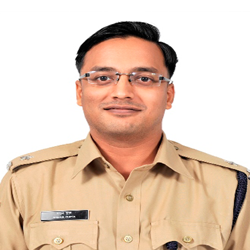
Verified StudentHe Studied Electrical Engineering at IIT, Kharagpur. Despite his brilliant academics and lucrative Career in Private Sector, with his prestigious IIM (Bangalore) graduation, he aspired to become IAS and cracked the toughest nut of UPSC with his patience and perseverance. He made investment on himself, worked for it, and is now a Unicorn in himself.
Siva Krishnamoorty IAS
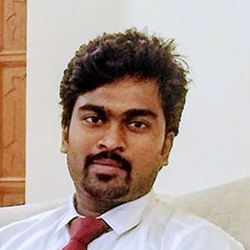
Verified StudentHis impressive writing abilities with clarity of thought made him achieve this. He used to write tests and essays and come to institute after 7.00 pm also. On Few Days he had even come at 9.00 p.m. That shows his dedication. Our faculty had waited till he comes. That’s the kind of personal touch every student gets at our Institute.
Bharani Kumar IAS
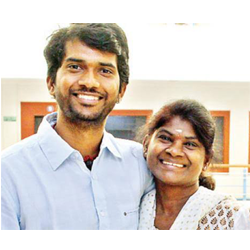
Verified StudentRaja Sir’s guidance and support helped me achieving my dream service of IAS. My optional subject was Political Science and International Relations. I fully relied on Sir’s inputs. Its my pleasure to thank him for his mentoring.
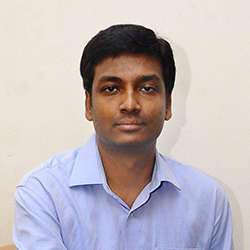
Jai Arvind IRS
Verified StudentAn alumni of College of Engineering, Guindy, Anna University, IIM Graduate, Ex Employee of RBS, is now an Indian Revenue Service Officer. He enrolled with us for Classes of Sociology, Political Science and International Relations, Current Affairs and General Studies Prelims Test Batch. He also guided our students for one batch of CSAT – Aptitude.
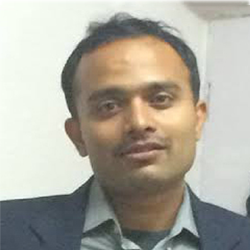
Rajarshi Das Gupta IRS
Verified StudentI joined Raja Sir’s Cracking IAS for General Studies & Essay. Study materials and tests provided by Raja Sir were crispy and catering to the exact demands of UPSC Civil Services Exam. Thank you Raja Sir.
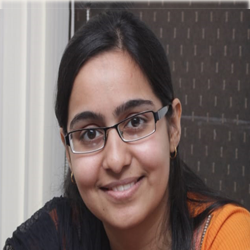
Nitika Pawar IAS (AIR, 18)
Verified StudentNitika Pawar obtained 18th rank in Civil Services Examination 2011 in her first attempt for the most prestigious position of Indian Administrative Services (IAS). Nitika Pawar had completed her B.Tech in Biotechnology. She joined us for the optional subject Political Science and International Relations.
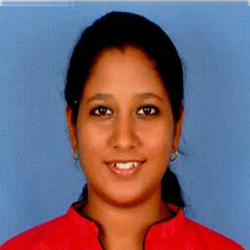
Saranya Baskar IAAS, AIR 143
Verified StudentShe is an alumnus of MOP Vaishnav College for Women, Chennai . With her tireless efforts and calm, composed approach to UPSC Civil Services Exam, she made it in her very first attempt immediately after her Graduation. Her optional subject was Political Science and International Relations.
U. Swaroop IAS
Verified StudentSir, I got personalised attention and especially your tests have helped me a lot. I will not forget your emphasis on Phytoremediation question which exactly got reflected in GS – Mains. Points notified during Mock Interview Session helped me to perform well in UPSC Interview.
Uma Maheshwari ICLS
Verified StudentShe was deeply impacted by something that Steve Jobs often spoke about – connecting the dots. “You have to place your trust and belief in something and keep working towards it. It will all somehow start making sense and come together,” says Uma. After facing so many failures, Uma just got it in her 6th attempt.